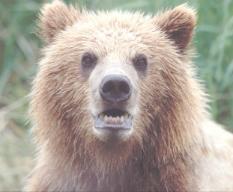
In celebration of Washington State Bear Awareness Week the Grizzly Bear Outreach Project (GBOP) will sponsor a Bear Awareness Day. This event will be hosted by the North Cascades Basecamp in Mazama.
Planned activities include:
• What's in your woods?, using a remote camera - Dennis Ryan.
• Exploring bear sign, tracking and ID - Gabe Spence.
• Bear habitat, biology and behavior - Scott Fitkin, WDFW.
• Review the status of grizzly bear recovery in the North Cascades.
Please bring your own bag lunch and wear clothes appropriate for short walks in the woods. Information about bear safety and being bear smart around your home will be available. There will be a demonstration of the effectiveness of bear pepper spray.
Join us for all or part of the day. Contact Dennis Ryan at dryan@methow.com or (509) 923-2464 if you have any questions or need directions. RSVP appreciated.
The North Cascades Basecamp is offering a discount for those wishing to stay the night or weekend.
Contact Josh Kerns:
North Cascades Basecamp & Lodging
255 Lost River Road, Mazama, WA 98833
509.996.2334
info@ncbasecamp.com, www.ncbasecamp.com
Monday, April 28, 2008
Thursday, April 10, 2008
Woodland Park Zoo Bear event
The Woodland Park Zoo celebrated the fourth annual Bear Affair day on Saturday , April 5th. The day began with Zoo staff hosting a behind the scenes tour to a group of 40 folks invited by GBOP to get an opportunity to meet the 950 pound grizzly brothers, Denali and Keema, up close and personal. The bears have a profound impression on everyone they meet. The group was also treated to a tour and overview of the wolf compound.

Later that morning an unsafe campsite was setup in their compound. The bears enthusiaticly demostrated what bears do to a camp left unattended and full of food. Its amazing to watch the systematic search for items hidden in tents, sleeping bags and coolers. This year a raft was placed in their swimming area. Inside was a tasty salmon.

In the afternoon items which might atteact bears to your home were placed in their compound. Included were a greasy grill, bird food feeder and two types of garbage containers. This photo says it all. The normal garbage container was destroyed in less than 30 seconds. However, the bear resistant garbage container withstood repeated assaults by both bears and remained intact. If you live in bear country, this is definitely the type of container you need. This container is a product of UnBearable Bins.

The crowd loved the demonstration almost as much as the bears loved putting on a show. Afterward they were ready for a nap.

A news crew from King 5 TV was on hand to cover the event. They ran a segment on the evening news which highlighted the need to avoid attracting bears and creating a conflict scenerio. The segment included the bear which closed the Puyallup park for a weekend. You can view the on air segment at the KING 5 website. Harriet Allen, Washington Department of Fish and Wildlife, gave two talks on wolf issues faced by the state during the day. All the events were attended by large crowds.
Many thanks to the Zoo staff for the flawless execution of an eventful day.

Later that morning an unsafe campsite was setup in their compound. The bears enthusiaticly demostrated what bears do to a camp left unattended and full of food. Its amazing to watch the systematic search for items hidden in tents, sleeping bags and coolers. This year a raft was placed in their swimming area. Inside was a tasty salmon.

In the afternoon items which might atteact bears to your home were placed in their compound. Included were a greasy grill, bird food feeder and two types of garbage containers. This photo says it all. The normal garbage container was destroyed in less than 30 seconds. However, the bear resistant garbage container withstood repeated assaults by both bears and remained intact. If you live in bear country, this is definitely the type of container you need. This container is a product of UnBearable Bins.

The crowd loved the demonstration almost as much as the bears loved putting on a show. Afterward they were ready for a nap.

A news crew from King 5 TV was on hand to cover the event. They ran a segment on the evening news which highlighted the need to avoid attracting bears and creating a conflict scenerio. The segment included the bear which closed the Puyallup park for a weekend. You can view the on air segment at the KING 5 website. Harriet Allen, Washington Department of Fish and Wildlife, gave two talks on wolf issues faced by the state during the day. All the events were attended by large crowds.
Many thanks to the Zoo staff for the flawless execution of an eventful day.


Thursday, March 13, 2008
Whatcom County supports Grizzly Bear recovery in the North Cascades
The Whatcom County Council passed the following resolution on March 11th, 2008. This resolution voices support for the implementation of the North Cascades Grizzly Bear Recovery Plan which was approved in 1997.
• Whatcom County’s wildlife and wild places are a core part of life in this beautiful county;
• The Whatcom County Comprehensive Plan encourages actions which “protect and enhance natural systems which provide economic, ecological, aesthetic, and cultural benefit (Goal 11H), and “protect and enhance natural systems that support…wildlife populations and habitat” (Goal 11J);
• There are many ecological, economic, and spiritual benefits to conserving and recovering grizzly bears and other native wildlife as an integral part of our county’s natural heritage, quality of life and identity;
• Chapter 2 of the Whatcom County Comprehensive Plan states that “maintaining healthy fish and wildlife populations is a vital goal in maintaining the quality of life in Whatcom County”;
• Grizzly bears are an “umbrella species” the conservation of which will benefit dozens of other plants and animals;
• The Washington State Department of Fish and Wildlife estimates that over $1.7 billion is spent annually in the US on wildlife watching activities, supporting more than 21,000 jobs;
• The people of Whatcom County take great pride in their county’s internationally significant wildlife legacy;
• The United States Fish and Wildlife Service has identified the North Cascades as one of only six grizzly bear recovery zones in the lower 48 states and the only grizzly bear recovery zone outside of the Rocky Mountains;
• The US Fish and Wildlife Service estimates there are less than 20 bears left in the North Cascades - a number too low to be self-sustaining;
• The federal government is mandated under the Endangered Species Act to protect and recover endangered wildlife populations;
• The federal North Cascades Grizzly Bear Recovery Plan has been in place for a decade but has not been fully implemented;
• The State of Washington and other public and private entities have appropriated funds for a public process under federal law to implement recovery planning.
NOW THEREFORE BE IT RESOLVED that the Whatcom County Council urges the United States Congress to appropriate necessary funding through the 2009 federal appropriations process and urges the U.S. Fish and Wildlife Service to immediately implement the North Cascades Grizzly Bear Recovery Plan including all necessary actions identified by their biologists to recover this highly endangered grizzly bear population.
Everyone at GBOP would like to sincerely thank each member of the Whatcom County Council in supporting North Cascade Grizzly Bear recovery and their leadership role in setting an example for others to follow.
• Whatcom County’s wildlife and wild places are a core part of life in this beautiful county;
• The Whatcom County Comprehensive Plan encourages actions which “protect and enhance natural systems which provide economic, ecological, aesthetic, and cultural benefit (Goal 11H), and “protect and enhance natural systems that support…wildlife populations and habitat” (Goal 11J);
• There are many ecological, economic, and spiritual benefits to conserving and recovering grizzly bears and other native wildlife as an integral part of our county’s natural heritage, quality of life and identity;
• Chapter 2 of the Whatcom County Comprehensive Plan states that “maintaining healthy fish and wildlife populations is a vital goal in maintaining the quality of life in Whatcom County”;
• Grizzly bears are an “umbrella species” the conservation of which will benefit dozens of other plants and animals;
• The Washington State Department of Fish and Wildlife estimates that over $1.7 billion is spent annually in the US on wildlife watching activities, supporting more than 21,000 jobs;
• The people of Whatcom County take great pride in their county’s internationally significant wildlife legacy;
• The United States Fish and Wildlife Service has identified the North Cascades as one of only six grizzly bear recovery zones in the lower 48 states and the only grizzly bear recovery zone outside of the Rocky Mountains;
• The US Fish and Wildlife Service estimates there are less than 20 bears left in the North Cascades - a number too low to be self-sustaining;
• The federal government is mandated under the Endangered Species Act to protect and recover endangered wildlife populations;
• The federal North Cascades Grizzly Bear Recovery Plan has been in place for a decade but has not been fully implemented;
• The State of Washington and other public and private entities have appropriated funds for a public process under federal law to implement recovery planning.
NOW THEREFORE BE IT RESOLVED that the Whatcom County Council urges the United States Congress to appropriate necessary funding through the 2009 federal appropriations process and urges the U.S. Fish and Wildlife Service to immediately implement the North Cascades Grizzly Bear Recovery Plan including all necessary actions identified by their biologists to recover this highly endangered grizzly bear population.
Everyone at GBOP would like to sincerely thank each member of the Whatcom County Council in supporting North Cascade Grizzly Bear recovery and their leadership role in setting an example for others to follow.
Tuesday, March 11, 2008
Governor Gregoire declares week of May 12 - 18 'Bear Awareness Week'
 On February 28, 2008 Governor Christine Gregoire proclaimed May 12-18, 2008, as 'Bear Awareness Week' in Washington State, and urged all citizens to join in this special observance.
The proclamation stressed the following points:
• Washington’s wildlife and wild places are a core part of life in this beautiful state;
• Washington’s forests and coastlines harbor one of the largest populations of black bears in the United States, and Washington is one of only five lower 48 states that is still wild enough to harbor a small number of grizzly bears, a federally-protected threatened species, both in the North Cascades and Selkirk Mountains;
• It is in the public interest to understand the ecology, behavior, and conservation of bears, and there is an ongoing need for widespread education and outreach concerning their welfare to enable peaceful coexistence with people who live or spend time in bear country;
• The Grizzly Bear Outreach Project, in partnership with multiple government and non-government organizations, is committed to providing accurate information about bears through innovative programs that engage the public;
• There are many ecological, economic, and spiritual benefits to promoting bears as a desirable part of our state’s natural heritage;
• The people of Washington State take great pride in their state’s wildlife legacy that is internationally significant.
 Special events to celebrate Bear Awareness Week and provide educational opportunities about the bears of Washington are being planned. Stay tuned to this BLOG for further details.
photo credit: Wayne Lynch
North Cascades Grizzly Bear Subcommittee Meeting, Tuesday April 22nd
 The next meeting of the North Cascades Grizzly Bear Recovery Subcommittee will be held at the US Forest Service Ranger Station in North Bend, Washington from 10 AM to 2:30 PM on April 22, 2008.
 An agenda for the meeting will be posted on the North Cascades Recovery Ecosystem webpage of the Interagency Grizzly Bear Committee (IGBC) website at www.IGBCONLINE.org as soon as it is finalized.
North Cascades Subcommittee meetings occur several times per year on both the east and west sides of the North Cascades. The public is always invited to attend and, for interested persons, there is time allotted for providing public comment during the meeting.
Even if you are not able to make the meeting, the IGBC website is a great place to learn more about grizzly bears, the IGBC and what’s happening in the 6 recovery ecosystems in the lower 48 states.
Submitted by:
Nan Laney
Skagit, Whatcom and Northern Snohomish Coordinator
Grizzly Bear Outreach Project
Sedro-Woolley, WA
Thursday, March 06, 2008
Join GBOP at Woodland Park Zoo (April 5) and REI (April 16)
Woodland Park Zoo and GBOP are hosting the annual Bear Affair Day on Saturday, April 5th.
Also join Chris Morgan, bear biologist, director of the Grizzly Bear Outreach Project and Producer of the feature documentary BEARTREK at the downtown Seattle REI on Wednesday, April 16th beginning at 7 pm.

On April 5th Woodland Park Zoo staff will give presentations at the various bear and wolf exhibits. REI and GBOP will set up a non-safe camp in the Grizzly Bear exhibit so that you can see what happens when bears encounter a camp full of food. A limited number of free WPZ tickets and behind the scene tour opportunities are available.
Contact Dennis Ryan at dryan@methow.com to sign up.
On April 16th travel from Spitzbergen to Spain, and learn how bears have struck the human imagination for thousands of years. On our own doorstep, the North American grizzly bear has garnered its fair share of acclaiming folklore. From old campfire tales to the film, Grizzly Man, accounts of the grizzly’s power, strength and grace have inspired curiosity and fear.
Come learn the truth about the elusive North Cascades grizzly bear as well as bears in wild locations like Spain, Canada, Pakistan, Ecuador, and Svalbard. REI is proud to welcome Chris Morgan, bear biologist, filmmaker, and director of the Grizzly Bear Outreach Project (GBOP). Chris will present a stunning, highly entertaining slide show demystifying the North Cascades grizzly bear, and it's cousins further afield. Chris Morgan has worked internationally as a biologist and educator for the last twenty years and will share his expert knowledge on bear ecology and conservation.
This will also be among the first opportunities to see footage from the feature-length documentary film 'BEARTREK' - a quest that that follows his global motorcycle adventure to the wildest places on the planet in search of unusual bear species and exotic cultures. In 2006, The Grizzly Bear Outreach Project received a grant from REI for their ongoing education efforts.
Chris Morgan, GBOP Director
Also join Chris Morgan, bear biologist, director of the Grizzly Bear Outreach Project and Producer of the feature documentary BEARTREK at the downtown Seattle REI on Wednesday, April 16th beginning at 7 pm.

On April 5th Woodland Park Zoo staff will give presentations at the various bear and wolf exhibits. REI and GBOP will set up a non-safe camp in the Grizzly Bear exhibit so that you can see what happens when bears encounter a camp full of food. A limited number of free WPZ tickets and behind the scene tour opportunities are available.
Contact Dennis Ryan at dryan@methow.com to sign up.
On April 16th travel from Spitzbergen to Spain, and learn how bears have struck the human imagination for thousands of years. On our own doorstep, the North American grizzly bear has garnered its fair share of acclaiming folklore. From old campfire tales to the film, Grizzly Man, accounts of the grizzly’s power, strength and grace have inspired curiosity and fear.
Come learn the truth about the elusive North Cascades grizzly bear as well as bears in wild locations like Spain, Canada, Pakistan, Ecuador, and Svalbard. REI is proud to welcome Chris Morgan, bear biologist, filmmaker, and director of the Grizzly Bear Outreach Project (GBOP). Chris will present a stunning, highly entertaining slide show demystifying the North Cascades grizzly bear, and it's cousins further afield. Chris Morgan has worked internationally as a biologist and educator for the last twenty years and will share his expert knowledge on bear ecology and conservation.
This will also be among the first opportunities to see footage from the feature-length documentary film 'BEARTREK' - a quest that that follows his global motorcycle adventure to the wildest places on the planet in search of unusual bear species and exotic cultures. In 2006, The Grizzly Bear Outreach Project received a grant from REI for their ongoing education efforts.
Chris Morgan, GBOP Director
Brown bears make a comeback in the mountains of Spain
The endangered brown bear, which once roamed the forests of Europe, is showing signs of recovery in one of its remaining strongholds, the Cantabrian mountains of Spain.

Small colonies of brown bears are increasing in the craggy northern cordillera of Asturias and Cantabria. After being menaced by illegal hunters and the encroaching infrastructure of tourism, numbers of fertile females have doubled in the past decade and traces of bear activity have tripled in the last two years.
A colony of 100 bears is thought to inhabit the west of the region, with another smaller colony of about 30 to the east. The reclusive animals are still on the endangered list and their long-term survival remains under threat because the number of animals remains small despite reproduction becoming consolidated in recent years.
"We would like to establish a corridor between the separate colonies to increase the bears' genetic diversity and reproductive velocity, and thereby their chances of survival," said Guillermo Palomero, head of the Santander-based Brown Bear Foundation (Fundacion Oso Pardo). "That is the only sure way of protecting them from becoming extinct."
A joint study by the foundation and Spain's environment ministry based on 16 years of observation of the bears in their natural habitat strongly recommends trying to establish a connection between the colonies, which are 30 miles apart, to safeguard the local population. While brown bear numbers have been boosted in the Pyrenees by importing animals from Slovenia, this is not an option "because Cantabria's brown bears are a pure species unique in Europe," Mr Palomero said.
The revival is partly due to more effective control of illegal hunters, or furtivos, who now face two years in jail and a fine of up to €300,000 (£230,000) for the "ecological crime" of killing a bear.
"Furtivos still exist. There may be fewer huntsmen with guns, but more traps and poison are laid for wolves and wild boars. They still do a lot of damage," said Mr Palomero. "Collaboration between the authorities and voluntary organisations has been crucial in consolidating bear populations during 2007. We mustn't drop our guard or cry victory too soon.
"The turning point was when we realised the importance of groups of females with their young cubs. While the males roam across country, the mother and her cubs stay within a defined area. We must protect them in their habitat, because they are the guarantee of the future."
Ursine history was made in the winter of 2006 when the foundation revealed that Cantabria's brown bears had stopped hibernating. The region's winters had become warmer in recent years, enabling the bears to forage for enough food all year round.
Bears are well known for their propensity to slumber through the winter to the point of biological shutdown. But their behaviour went through a revolutionary change when female brown bears with young cubs found enough nuts, acorns, chestnuts and berries on Spain's bleak northern mountainsides to make the effort of staying awake and hunting for food "energetically worthwhile".
By Elizabeth Nash in Madrid
Thursday, 28 February 2008

Small colonies of brown bears are increasing in the craggy northern cordillera of Asturias and Cantabria. After being menaced by illegal hunters and the encroaching infrastructure of tourism, numbers of fertile females have doubled in the past decade and traces of bear activity have tripled in the last two years.
A colony of 100 bears is thought to inhabit the west of the region, with another smaller colony of about 30 to the east. The reclusive animals are still on the endangered list and their long-term survival remains under threat because the number of animals remains small despite reproduction becoming consolidated in recent years.
"We would like to establish a corridor between the separate colonies to increase the bears' genetic diversity and reproductive velocity, and thereby their chances of survival," said Guillermo Palomero, head of the Santander-based Brown Bear Foundation (Fundacion Oso Pardo). "That is the only sure way of protecting them from becoming extinct."
A joint study by the foundation and Spain's environment ministry based on 16 years of observation of the bears in their natural habitat strongly recommends trying to establish a connection between the colonies, which are 30 miles apart, to safeguard the local population. While brown bear numbers have been boosted in the Pyrenees by importing animals from Slovenia, this is not an option "because Cantabria's brown bears are a pure species unique in Europe," Mr Palomero said.
The revival is partly due to more effective control of illegal hunters, or furtivos, who now face two years in jail and a fine of up to €300,000 (£230,000) for the "ecological crime" of killing a bear.
"Furtivos still exist. There may be fewer huntsmen with guns, but more traps and poison are laid for wolves and wild boars. They still do a lot of damage," said Mr Palomero. "Collaboration between the authorities and voluntary organisations has been crucial in consolidating bear populations during 2007. We mustn't drop our guard or cry victory too soon.
"The turning point was when we realised the importance of groups of females with their young cubs. While the males roam across country, the mother and her cubs stay within a defined area. We must protect them in their habitat, because they are the guarantee of the future."
Ursine history was made in the winter of 2006 when the foundation revealed that Cantabria's brown bears had stopped hibernating. The region's winters had become warmer in recent years, enabling the bears to forage for enough food all year round.
Bears are well known for their propensity to slumber through the winter to the point of biological shutdown. But their behaviour went through a revolutionary change when female brown bears with young cubs found enough nuts, acorns, chestnuts and berries on Spain's bleak northern mountainsides to make the effort of staying awake and hunting for food "energetically worthwhile".
By Elizabeth Nash in Madrid
Thursday, 28 February 2008
Wildlife and the Economy
In these sluggish economic times, we might ask “When budgets are so tight, what is the value of supporting the cost of wildlife projects?”
Actually, wildlife viewing, fishing and hunting are big business. According to a Winter 2008 report from the Washington State Department of Fish and Wildlife:
• Washington draws 2,331,000 wildlife watchers annually – both resident and non-resident.
• Annual spending in Washington by wildlife watchers totals $1,502,311,000 (that's billions folks).
• Washington ranks 7th in the nation in spending behind California, Florida, Texas, Michigan, Georgia and New York.
• Spending increased 53 percent from 2001 to 2006.
These monies are spent on travel, food, lodging, equipment and other goods and services. The bounty is spread across the state, especially in small towns and rural areas, lending an economic boon to many areas that need it.
Beyond the aesthetic and spiritual values we feel towards nature and wildlife, those critters also contributes greatly to our economy!
Julie L. (Hayes) Hopkins
Marine and Wildlife Biologist
Threatened and Endangered Species Specialist
Cetos Research Organization. 'Working to enhance and augment conservation and management of living marine resources through research.'
www.cetosresearch.org
Grizzly Bear Outreach Project. 'Promoting an accurate understanding of grizzly bears and their recovery in the North Cascades Ecosystem through community education and involvement.'
Actually, wildlife viewing, fishing and hunting are big business. According to a Winter 2008 report from the Washington State Department of Fish and Wildlife:
• Washington draws 2,331,000 wildlife watchers annually – both resident and non-resident.
• Annual spending in Washington by wildlife watchers totals $1,502,311,000 (that's billions folks).
• Washington ranks 7th in the nation in spending behind California, Florida, Texas, Michigan, Georgia and New York.
• Spending increased 53 percent from 2001 to 2006.
These monies are spent on travel, food, lodging, equipment and other goods and services. The bounty is spread across the state, especially in small towns and rural areas, lending an economic boon to many areas that need it.
Beyond the aesthetic and spiritual values we feel towards nature and wildlife, those critters also contributes greatly to our economy!
Julie L. (Hayes) Hopkins
Marine and Wildlife Biologist
Threatened and Endangered Species Specialist
Cetos Research Organization. 'Working to enhance and augment conservation and management of living marine resources through research.'
www.cetosresearch.org
Grizzly Bear Outreach Project. 'Promoting an accurate understanding of grizzly bears and their recovery in the North Cascades Ecosystem through community education and involvement.'
Tuesday, January 22, 2008
Upper Skagit Bald Eagle Festival
 On January 26 and 27 Nan Laney, Skagit and Northern Snohomish GBOP Coordinator, will staff a GBOP booth at the Upper Skagit Bald Eagle Festival in Concrete (Skagit County). This is the fourth year that GBOP has been in attendance at this wonderful and popular event. Additionally, on Sunday January 27th from 12:30-1:30, Nan will be presenting information about the North Cascades’ grizzly and black bears at the festival.
 The Upper Skagit Bald Eagle Festival, in it’s 21st year, often draws crowds that exceed 4,000 attendees. This free 2-day event is one of the culminations of the eagle watching season in the Upper Skagit, and is an excellent opportunity to learn more about North Cascades raptors, salmon and other wildlife, geology, archeology and Native American culture. Each year, the entertainment on Saturday night features Native American storytelling, drumming and dancing. The emphasis on the Native American culture and it’s ties to wildlife and the North Cascades is always a highlight of the festival. Additionally, a big draw for attendees are the live raptors brought in by Sardis Raptor Center, with presentations including the live birds interspersed throughout the weekend.
For more information about the festival, including information on presentations and events, check out the festival’s website.
Teacher clock hours are available for attending the event.
Skagit River Interpretive Center
At 11:00 AM on Sunday February 17th, Nan will also be doing a presentation at the new Skagit River Interpretive Center in Rockport. Thanks to the hard work of many nonprofits and individuals in Skagit County, the Interpretive Center, formerly located in the old Rockport Fire Hall (which itself was renovated from an old school house), moved to it’s new home next to Howard Miller Steelhead Park. In association with the peak eagle viewing season, the Interpretive Center hosts presentations on Saturday and Sunday during the months of December, January and February each year.
Visit the Skagit River Interpretive Center website for more information, including speaker schedule.
Festival poster was created by Don Smith, Cascadian Farm senior designer, with help from Concrete High School students.
Tuesday, January 08, 2008
Thirty years of Biodiversity?

On December 4th, the Washington Biodiversity Council presented a thirty year plan to promote biodiversity within Washington State. Washington’s plan recognized six eco-regions which would be managed separately.
Biodiversity is the variation of life forms within a given ecosystem. Biodiversity is often used as a measure of the health of biological systems. The term "natural heritage" pre-dates "biodiversity", though it is a less scientific term and more easily comprehended in some ways by the wider audience interested in conservation. The most straightforward definition is "variation of life at all levels of biological organization". Another definition that is often used by ecologists is the "totality of genes, species, and ecosystems of a region.
Ecosystems benefit greatly when the level of biodiversity is high. There is a greater resistance to catastrophe. A wide range of crop varieties are available for human consumption. A variety of plant and animal species contribute to the search for new medicines and industrial materials. Intellectual value, leisure, cultural and aesthetic value increases. An ecosystem is able to react to changes in the local environment as the effects of global warming become apparent.
The WASHINGTON BIODIVERSITY PROJECT is an effort of the Washington Biodiversity Council to address one of the most pressing environmental issues of our time: How to conserve our state's native plants, animals, and ecosystems for current and future generations. After three years of work, the Washington Biodiversity Council has delivered the Washington Biodiversity Conservation Strategy: "Sustaining Our Natural Heritage For Future Generations". The strategy is designed to conserve Washington’s unique plant and animal communities. It was released in front of a large crowd attending the Biodiversity Conservation Conference in Seattle: "What Works, What’s Next".
The council, a diverse group representing landowners, environmentalists, government agencies, tribes, and others, has developed the strategy to lay out a path forward to enhance biodiversity in Washington. It also supports other priorities, such as the Puget Sound Partnership and efforts to address climate change. Three broad initiatives form the heart of the strategy—a new approach to defining priorities, fostering widespread landowner engagement, and measuring progress:
• Guiding investments on the land, through the use of a new tool which maps biodiversity value and threats at a landscape, regional scale;
• Improving incentives and advancing markets for landowners to provide tangible benefits for conservation on working lands and open spaces;
• Engaging citizens to work with scientists to inventory and monitor Washington’s biodiversity.
The Council sponsored two conservation pilot projects. The two projects, one on the east side of the state and one on the west side each received $20,000 from the Council, and ran for 18 months, January 2006 through June 2007. The general goals of the pilots were to demonstrate new models for promoting incentive-based biodiversity conservation tools, and to engage citizens in biodiversity conservation. The two projects have taken different approaches to these goals. The findings from the projects formed key components of the Washington Biodiversity Conservation Strategy. The pilot projects may also serve as models for other communities.
Citizen Stewardship of the Pierce County Biodiversity Network: Lower White River
The Council’s western Washington pilot project focused on the lower White River between Buckley and Sumner. This area retains significant functional riparian habitat that supports a variety of fish and wildlife species despite rapid urbanization. The lower White River corridor is a Biodiversity Management Area (BMA) in Pierce County. Landowners in Pierce County BMAs are eligible for reduced property taxes.
The Healthy Lands Initiative
The Healthy Lands Initiative worked to develop a shared community vision for how biodiversity conservation can be integrated with the economic and social needs of the North Central Washington region, including Okanogan, Douglas, and Chelan Counties, and the Colville Indian Reservation. This area is very rich in biodiversity and ecological function, and it provides a major migration corridor between Canada and the Columbia Plateau.
Wednesday, January 02, 2008
Wendy goes to Mexico and what a trip
I was fortunate to be able to attend the 18th International Association of Bear Research and Management (IBA) conference Nov 4-11 in Monterrey Mexico. The IBA is a non-profit organization open to professional biologists, wildlife managers and others dedicated to the conservation of all bear species. (www.bearbiology.com).
There were 268 people from 26 different countries at the conference making for a truly international experience. In all, 54 oral presentations were given along with 87 poster presentations. These ranged from bear research and conservation, bear nutrition, population estimates to human –bear interactions and conflicts. I attended all 54 talks, participated in a bear management workshop, attended two genetic workshops and the bear specialist group meeting. I also presented a poster on Bear Affair, a collaborative event with the Grizzly Bear Outreach Project and the Woodland Park Zoo.
All of the presentations were interesting but one that really impressed me was presented by Jon Swenson titled: “Pragmatic Management Can Conserve Low Productive High-Altitude Brown Bears in South Asia”. In 1993 the Deosai Plateau was declared a national park in order to try and protect the highly threatened brown bears in Pakistan whose numbers were declining. The local people rely on the natural resources in the park but legislation prohibited them from taking anything from the park which caused conflicts between the local people and park management. To help alleviate these conflicts a new approach was taken that involved the local people in park management and recognized their community rights. The number of bears in the park was monitored between 1993 and 2006 and in that time they saw an increase in the population of 5% each year (this was from reproduction and immigration). This is really impressive when you learn that the bears in Deosai have really low reproductive rates. The average age of first reproduction is 8.25 years, the reproduction interval is 5.8 years, litter size is 1.33 and the family stays together for 4.2 years (longest time recorded for brown bears). The survival rate of offspring is higher in Deosai as well (0.94 for cubs, 0.96 for yearlings). These results show that when communities and management work together they can make positive changes.
My poster was on Bear Affair, an annual event put on at the Woodland Park Zoo. The day starts off with a bear “un-safe” campsite being set up in the brown bear (Ursus arctos) exhibit. We put out a tent, sleeping bags, coolers, shoes, table and chairs, backpacks and a campfire pit. Food is placed either in or on all of these camping items. Dry food bags are hung up in a tree but are not put up high enough. All of this is done to show how not to set up a campsite in bear country. In the afternoon we give the bears bear resistant food containers (BRFC) and talk about why they are important to use when camping and /or hiking in bear country.
It was a very busy week filled with a lot of learning and sharing of
information with new and old friends. There were also the adventurous taxi and bus rides through the city, the likes I have not experienced before, but it made for many a laugh with the people I shared this experience with. What a wonderful way for a bear lover to spend a week!
“Pragmatic Management Can Conserve Low Productive High-Altitude Brown Bears In South Asia”. Muhammad Ali Nawaz (Department of Ecology and Natural Resource Management, Norwegian University of Life Sciences); Jon Swenson (Department of Ecology and Natural Resource Management, Norwegian University of Life Sciences); Vaqar Zakaria (Himalayan Wildlife Foundation, Islamabad, Pakistan).
Submitted by Wendy Gardner
There were 268 people from 26 different countries at the conference making for a truly international experience. In all, 54 oral presentations were given along with 87 poster presentations. These ranged from bear research and conservation, bear nutrition, population estimates to human –bear interactions and conflicts. I attended all 54 talks, participated in a bear management workshop, attended two genetic workshops and the bear specialist group meeting. I also presented a poster on Bear Affair, a collaborative event with the Grizzly Bear Outreach Project and the Woodland Park Zoo.
All of the presentations were interesting but one that really impressed me was presented by Jon Swenson titled: “Pragmatic Management Can Conserve Low Productive High-Altitude Brown Bears in South Asia”. In 1993 the Deosai Plateau was declared a national park in order to try and protect the highly threatened brown bears in Pakistan whose numbers were declining. The local people rely on the natural resources in the park but legislation prohibited them from taking anything from the park which caused conflicts between the local people and park management. To help alleviate these conflicts a new approach was taken that involved the local people in park management and recognized their community rights. The number of bears in the park was monitored between 1993 and 2006 and in that time they saw an increase in the population of 5% each year (this was from reproduction and immigration). This is really impressive when you learn that the bears in Deosai have really low reproductive rates. The average age of first reproduction is 8.25 years, the reproduction interval is 5.8 years, litter size is 1.33 and the family stays together for 4.2 years (longest time recorded for brown bears). The survival rate of offspring is higher in Deosai as well (0.94 for cubs, 0.96 for yearlings). These results show that when communities and management work together they can make positive changes.
My poster was on Bear Affair, an annual event put on at the Woodland Park Zoo. The day starts off with a bear “un-safe” campsite being set up in the brown bear (Ursus arctos) exhibit. We put out a tent, sleeping bags, coolers, shoes, table and chairs, backpacks and a campfire pit. Food is placed either in or on all of these camping items. Dry food bags are hung up in a tree but are not put up high enough. All of this is done to show how not to set up a campsite in bear country. In the afternoon we give the bears bear resistant food containers (BRFC) and talk about why they are important to use when camping and /or hiking in bear country.
It was a very busy week filled with a lot of learning and sharing of
information with new and old friends. There were also the adventurous taxi and bus rides through the city, the likes I have not experienced before, but it made for many a laugh with the people I shared this experience with. What a wonderful way for a bear lover to spend a week!
“Pragmatic Management Can Conserve Low Productive High-Altitude Brown Bears In South Asia”. Muhammad Ali Nawaz (Department of Ecology and Natural Resource Management, Norwegian University of Life Sciences); Jon Swenson (Department of Ecology and Natural Resource Management, Norwegian University of Life Sciences); Vaqar Zakaria (Himalayan Wildlife Foundation, Islamabad, Pakistan).
Submitted by Wendy Gardner
Monday, December 17, 2007
Yellowstone’s grizzly bear population declines in 2007
This year’s population decline of females with cubs triggers concern among federal biologists. Despite de-listing of the grizzly bears less than a year ago, recovery of the grizzly bear population in Yellowstone National Park is still being watched carefully. For 2007, officials have totaled up to 25 deaths of females over the age of 2 from hunting accidents, management removals and natural causes. For every bear reported, a possible two more went unreported, according to Chuck Schwartz, Interagency Grizzly Bear Study Team leader. Overall, the population of 571 bears in Yellowstone is thriving, but a seemingly small loss of young female bears can have a large impact on the population. A loss of 9% of the female population over two years would trigger a review and potential listing of the bears back under the protection of the Endangered Species Act.
Several environmental factors also contributed to the higher mortality this year. Three out of four of the bear’s critical foods were in short supply. Late frosts damaged the berry crops, Deaths of whitebark pine trees due to mountain pine beetles and blister rust meant a lack of pine seeds. There is actually a positive relationship between whitebark pine seed production and grizzly bear birth rates. Cutthroat trout struggle to hold their own against introduced lake trout. Cutthroat populations have declined in some streams from 60,000 in the 1970’s to only 500 this year. Additionally, the mild winter last year meant fewer elk winter-kill carcasses. Only the army cut-worm moth resource seems to be intact this year.
Most bears will look for alternative foods in years like this one. Researchers have been testing the body fat content of the bears since 2000. They are finding bears entering dens at a 30% body fat, which indicates healthy animals, and a healthy environment. Still the lack of natural food sources is cause for worry. One year of high female mortality is not a crisis, but officials will be monitoring the population numbers in the coming year. “Our major concern through all of this is that we don’t allow the bear population to decline because of humans” says Schwartz.
Excerpted from an article by Cole Hatch, Jackson Hole News and Guide, October 31, 2007,
Submitted by Julie Hopkins
Several environmental factors also contributed to the higher mortality this year. Three out of four of the bear’s critical foods were in short supply. Late frosts damaged the berry crops, Deaths of whitebark pine trees due to mountain pine beetles and blister rust meant a lack of pine seeds. There is actually a positive relationship between whitebark pine seed production and grizzly bear birth rates. Cutthroat trout struggle to hold their own against introduced lake trout. Cutthroat populations have declined in some streams from 60,000 in the 1970’s to only 500 this year. Additionally, the mild winter last year meant fewer elk winter-kill carcasses. Only the army cut-worm moth resource seems to be intact this year.
Most bears will look for alternative foods in years like this one. Researchers have been testing the body fat content of the bears since 2000. They are finding bears entering dens at a 30% body fat, which indicates healthy animals, and a healthy environment. Still the lack of natural food sources is cause for worry. One year of high female mortality is not a crisis, but officials will be monitoring the population numbers in the coming year. “Our major concern through all of this is that we don’t allow the bear population to decline because of humans” says Schwartz.
Excerpted from an article by Cole Hatch, Jackson Hole News and Guide, October 31, 2007,
Submitted by Julie Hopkins
Tuesday, December 11, 2007
What's happening behind your back?
Have you ever noticed that when you are out walking in the woods you seldom see a lot of wildlife?
A friend who has a cabin in the Teanaway River drainage (near Cle Elum, Washington) wondered about this. So he mounted remote video cameras and captured these images.
Amazing the variety of wildlife he has on his property. Of course he never sees them when he is out and about. What's happening in your backyard when you are not around?
A friend who has a cabin in the Teanaway River drainage (near Cle Elum, Washington) wondered about this. So he mounted remote video cameras and captured these images.
Amazing the variety of wildlife he has on his property. Of course he never sees them when he is out and about. What's happening in your backyard when you are not around?
Thursday, December 06, 2007
Is this a famously elusive North Cascades grizzly bear?
 Photo: This could well be the most recent grizzly bear sighting in the North Cascades. Proving it is another matter. Photo by Pat Lathrop.
Look at the picture above very carefully. You're looking at a family of bears crossing a glacier in the North Cascades mountains in the summer of 2006. But are they black bears or grizzly bears? That's the million dollar question. The picture was submitted to me by Pat Lathrop who, while hiking the Glacier Peak Wilderness came across this amazing site with a friend. As he raised the binoculars to his eyes he knew the significance of what he was witnessing. Without saying a word, he quietly handed his binoculars to his hiking companion and asked, "What do you think they are?". His friend replied, "Wow - it's a family of grizzly bears!". This is how Pat relayed the story to me as we spoke on the phone. He explained that he had been to one of my slide shows several years earlier at REI and that he therefore understood how important a sighting like this was. Pat has seen many bears - both grizzly and black, in other parts of North America, and he was personally "one hundred percent sure" that what he saw that day was a family of grizzly bears crossing the glacier from one valley to the next. When he handed the binoculars to his friend he didn't want to influence his response, so he kept quiet. His friend's reaction only further convinced Pat that this was a very special moment.
The problem is follow-up. How do we prove that these were in fact grizzly bears? Of course the dots on the photograph can't be used for verification, but what about trying to track them in the field? Looking for tracks is one option, but they are extremely tough to find. We can use remotely-triggered cameras, or even hair snags that capture a clump of DNA from the cpat of a passing bear. Even a pile of scat can yield DNA which would tell us if it was left behind by a black or grizzly bear. But when you consider that a female bear and yearlings might cover 200-300 square miles as part of their regular home range, the problems of sighting verification become obvious.
When there are fewer than 20 grizzly bears left in the 10,000 square mile North Cascades ecosystem it is critical that any possible sighting is reported. We receive about 20 reports per year thanks to the very active GBOP field crew who are out there interacting with the public all year round, and thanks also to an online reporting system we've developed. However, my guess is that, on average, about 17 of these 20 sound like black bears that people have confused with grizzly bears (an easy thing to do when you consider that black and grizzly bears can have coats that are anything from blonde to black).
Please spread the word - if you see a North Cascades grizzly bear, let us know! (GBOP sighting report). For MUCH more information about bears in the cascades, go to our website: www.bearinfo.org
Chris Morgan, Bear ecologist, GBOP Director
Thursday, November 29, 2007
Op Ed - Grizzly Recovery In The North Cascades
In the August 2007 issue of Washington Trails, Jonathan Guzzo penned a thoughtful article on preservation and recovery of the grizzly bear and its habitat in the North Cascades. Mr. Guzzo presented questions on the topic and suggested that we get the “conversation started so we can make the best decision for future hikers and this magnificent species.” These are some of my thoughts on the subject.
As to the question of whether or not hikers will be safe in the back country in the presence of a grizzly bear population, I have no doubt that we will continue to be safe. Of course, both the question and answer are a bit loaded in the sense that we are never completely safe when we hike; a myriad of difficulties—from merely problematic to fatal—can arise on a trek, so it is not just the presence of a large animal that raises the issue of safety. In my view, our safety is largely dependant upon our knowledge. The more knowledge is inherent in a thing the greater the understanding and the greater the understanding the greater the safety (with apologies to Paracelsus). Conversely, the less we understand something, the more we tend to fear it, and fear of the grizzly has led to an enormous misunderstanding of the great bear. That misunderstanding and fear began with Lewis & Clark, who did no favor for the grizzly, as their descriptions and accounts of the bear resulted in the scientific name Ursus arctos horribilis (the horrible bear) which was bestowed upon the grizzly by George Ord in 1815. Unfortunately, the Lewis & Clark scientific descriptions of the grizzly were overshadowed by their stories of a “grizzle” bear who, when wounded by gunfire, became angry and assaulted its attacker. From that day to this, the fear-mongering stories about grizzlies have continued unabated. But the horrible bear of George Ord is not the animal described in the insightful books of William H. Wright, Frank Craighead and Doug Peacock. Nor is it the animal I know.
There are a multitude of things we should know and preparations we should make before venturing into the backcountry. For example, the ten essentials are—well—essential. So is the need to know the terrain, weather conditions and wildlife we might encounter. And the grizzly is certainly not the only animal we should be aware of. One recent October I was confronted by a bull elk who, inexplicably, thought I had more than just an observer’s interest in a member of his harem. It wasn’t true, of course, but I knew enough about a bull elk in rut to be prepared for his behavior. The point is this: knowing how to use the medical kit in your backpack is every bit as important as knowing how to conduct yourself in grizzly country. While the chance of even seeing a grizzly in the wild is remote, there is no substitute for informed human behavior if you do. Proper grizzly etiquette can be learned from a number of different sources, including the books alluded to above, but two excellent resources are Lance Olsen’s Field Guide To The Grizzly Bear (1992, Sasquatch Books), and the Grizzly Bear Outreach Project (www.bearinfo.org).
Another of Mr. Guzzo’s questions deals with possible loss of trail miles—that is, trail closures “due to bear activity or den emergence.” He suggests that this is likely, and I think he is right about that. I see no reason why the government would deal with grizzlies any different in the North Cascades than it does in Yellowstone and Glacier National Parks. Mostly for liability reasons, I believe, the government tends to err on the side of caution by closing trails quickly upon learning of bear activity. I don’t always agree with it, but I think this is policy. More important, I can accept this as a sort of cost of doing business in and for the wilderness. I can even accept the idea of permanently closed areas, such as those in Denali National Park, in furtherance of grizzly survival and habitat. For me, the presence of the grizzly legitimizes our definition of wilderness, and to know that our wilderness areas are truly wild and being protected by sensible regulation is more important than my presence there.
It has been said that the grizzly bear is the very symbol of American wilderness and I wonder, if the grizzly is removed, do we still have wilderness? I suppose the answer for many people is yes but, even accepting that, it seems to me that our wilderness is diminished with each species removed. And where does removal end? Is the elk next? How about moose? Both elk and moose have killed humans. And rattle snakes—good gracious, let’s get rid of those snakes! Arguably, the removal of creatures that are deemed undesirable for one reason or another is a slippery slope. To me, the grizzly is much more than a symbol. Knowing, when I am in grizzly country, that I am no longer at the top of the food chain is a humbling and wonderful personal experience. But, knowing that the grizzly is out there, especially when I am not, is far more important.
By Mick Tronquet
Editors note: Mick has a great interest in educating the public about grizzly bears in the North Cascades. He will be supporting GBOP through volunteer efforts in the Seattle area where he practices law. Through more of an op-ed piece, the questions raised here are thought provoking and part of the dialog which we as a community must engage in order to address the issue of grizzly recovery. Currently less than 20 grizzly bears live in the North Cascades. A declining number that many biologists deem to low to sustain a viable population over time. What are we as a society to do about this situation? Its a personnal choice that should be based on educated fact, not emotional fiction. We welcome well thought out opinions on this subject. Please submit any entries you would like considered for publishing on the GBOP BLOG to Dennis Ryan.
As to the question of whether or not hikers will be safe in the back country in the presence of a grizzly bear population, I have no doubt that we will continue to be safe. Of course, both the question and answer are a bit loaded in the sense that we are never completely safe when we hike; a myriad of difficulties—from merely problematic to fatal—can arise on a trek, so it is not just the presence of a large animal that raises the issue of safety. In my view, our safety is largely dependant upon our knowledge. The more knowledge is inherent in a thing the greater the understanding and the greater the understanding the greater the safety (with apologies to Paracelsus). Conversely, the less we understand something, the more we tend to fear it, and fear of the grizzly has led to an enormous misunderstanding of the great bear. That misunderstanding and fear began with Lewis & Clark, who did no favor for the grizzly, as their descriptions and accounts of the bear resulted in the scientific name Ursus arctos horribilis (the horrible bear) which was bestowed upon the grizzly by George Ord in 1815. Unfortunately, the Lewis & Clark scientific descriptions of the grizzly were overshadowed by their stories of a “grizzle” bear who, when wounded by gunfire, became angry and assaulted its attacker. From that day to this, the fear-mongering stories about grizzlies have continued unabated. But the horrible bear of George Ord is not the animal described in the insightful books of William H. Wright, Frank Craighead and Doug Peacock. Nor is it the animal I know.
There are a multitude of things we should know and preparations we should make before venturing into the backcountry. For example, the ten essentials are—well—essential. So is the need to know the terrain, weather conditions and wildlife we might encounter. And the grizzly is certainly not the only animal we should be aware of. One recent October I was confronted by a bull elk who, inexplicably, thought I had more than just an observer’s interest in a member of his harem. It wasn’t true, of course, but I knew enough about a bull elk in rut to be prepared for his behavior. The point is this: knowing how to use the medical kit in your backpack is every bit as important as knowing how to conduct yourself in grizzly country. While the chance of even seeing a grizzly in the wild is remote, there is no substitute for informed human behavior if you do. Proper grizzly etiquette can be learned from a number of different sources, including the books alluded to above, but two excellent resources are Lance Olsen’s Field Guide To The Grizzly Bear (1992, Sasquatch Books), and the Grizzly Bear Outreach Project (www.bearinfo.org).
Another of Mr. Guzzo’s questions deals with possible loss of trail miles—that is, trail closures “due to bear activity or den emergence.” He suggests that this is likely, and I think he is right about that. I see no reason why the government would deal with grizzlies any different in the North Cascades than it does in Yellowstone and Glacier National Parks. Mostly for liability reasons, I believe, the government tends to err on the side of caution by closing trails quickly upon learning of bear activity. I don’t always agree with it, but I think this is policy. More important, I can accept this as a sort of cost of doing business in and for the wilderness. I can even accept the idea of permanently closed areas, such as those in Denali National Park, in furtherance of grizzly survival and habitat. For me, the presence of the grizzly legitimizes our definition of wilderness, and to know that our wilderness areas are truly wild and being protected by sensible regulation is more important than my presence there.
It has been said that the grizzly bear is the very symbol of American wilderness and I wonder, if the grizzly is removed, do we still have wilderness? I suppose the answer for many people is yes but, even accepting that, it seems to me that our wilderness is diminished with each species removed. And where does removal end? Is the elk next? How about moose? Both elk and moose have killed humans. And rattle snakes—good gracious, let’s get rid of those snakes! Arguably, the removal of creatures that are deemed undesirable for one reason or another is a slippery slope. To me, the grizzly is much more than a symbol. Knowing, when I am in grizzly country, that I am no longer at the top of the food chain is a humbling and wonderful personal experience. But, knowing that the grizzly is out there, especially when I am not, is far more important.
By Mick Tronquet
Editors note: Mick has a great interest in educating the public about grizzly bears in the North Cascades. He will be supporting GBOP through volunteer efforts in the Seattle area where he practices law. Through more of an op-ed piece, the questions raised here are thought provoking and part of the dialog which we as a community must engage in order to address the issue of grizzly recovery. Currently less than 20 grizzly bears live in the North Cascades. A declining number that many biologists deem to low to sustain a viable population over time. What are we as a society to do about this situation? Its a personnal choice that should be based on educated fact, not emotional fiction. We welcome well thought out opinions on this subject. Please submit any entries you would like considered for publishing on the GBOP BLOG to Dennis Ryan.
Wednesday, November 28, 2007
Tis the season...to Hibernate
 Laying down for a long winter’s sleep…sounds like a great way to deal with the holiday hustle and bustle. Actually hibernation is a method to deal with the lack of available food in the winter. Bears eat a diet of primarily plants, berries and insects, eating enough to gain 30 lbs. per week. In winter there is not enough food to be found to keep a bear going.
Bears look for a place of safety while they are in this sleeping state from October to April. In fall they will scrape leaves and plant material into a cave, burrow, hollowed out tree or rock crevice as a nest. Sometimes they just make a nest on the surface of the ground. Bears curl into a ball to endure the cold of winter. Dens offer little or no insulating value, and are usually the same temperature as outside the den. The bears heavy winter coat and fat layer do all the insulating. The heavy, rounded shape of a bear provides a low surface area-to-mass ratio that is the key to retaining heat.
Using reserves of fat accumulated over the spring and summer, bears can go over 100 days without eating, drinking, urinating or defecating. Fat breaks down into water and 4000 calories per day. Muscle and organs break down to provide protein, yet they don’t loose any muscle mass. They are later able to rebuild those organs, unlike a starving human. Calcium is efficiently recycled so they experience no bone loss, as inactive people do. Their heart beat goes from 55 to 8 beats per minute. Body temperature drops by 12 degrees. Metabolism drops by half. They sleep deeply, but can wake occasionally although it takes some time; minutes to hours. Smaller hibernators, such as squirrels, bats and marmots wake much more frequently during hibernation than bears.
Grizzly bears have long claws and are known for their skill in digging. They prefer to dig their den into the north slope at high elevation so they get covered by the maximum amount of insulating snow. Black bears have much smaller claws and are not known for their digging skills. They prefer to find a suitable site that only requires remodeling.
Scientists are studying hibernation to aid in several human conditions. We’d like to understand their ability to maintain perfect water balance without drinking for 100 days, or how bears deal with toxic urea building up in the blood stream. There are many implications for patients suffering from kidney disease. Also, bears have double the cholesterol of humans but no hardening of their arteries. There also remains the possibility of inducing human hibernation for transporting wounded soldiers from battlefields, treating the severely burned or preserving organs by inducing hibernation in the organ itself. Obesity, osteoporosis, diabetes, kidney and gall bladder problems, muscle-wasting conditions are among the conditions bears could help us to understand. NASA is interested in the implications for long distance space travel.
Mmm, think I might go take a nap…
Submitted by Julie Hayes
GBOP position announcement
GBOP is seeking a Field Coordinator for wildlife education and community outreach.
We are currently seeking candidates for the role of field coordinator in the Highway 2 area. The position will be based in or near to Leavenworth, covering an area from approximately Sultan to Wenatchee.
It is a part time position (2 days per week) coordinating outreach activities of the Grizzly Bear Outreach Project and it's associated Bear Smart Program. Minimum education includes a bachelor’s degree and experience planning and implementing community programs. Pays $19-21/hour incl. depending on experience. Must have dependable transportation (0.45c/mile reimbursed) and must reside in project area. Email resume, letter and references to Chris Morgan.
We are currently seeking candidates for the role of field coordinator in the Highway 2 area. The position will be based in or near to Leavenworth, covering an area from approximately Sultan to Wenatchee.
It is a part time position (2 days per week) coordinating outreach activities of the Grizzly Bear Outreach Project and it's associated Bear Smart Program. Minimum education includes a bachelor’s degree and experience planning and implementing community programs. Pays $19-21/hour incl. depending on experience. Must have dependable transportation (0.45c/mile reimbursed) and must reside in project area. Email resume, letter and references to Chris Morgan.
Monday, November 19, 2007
REI hosts community expo at the new Issaquah store
 GBOP and about a dozen community-based organizations were on hand this weekend to help REI welcome customers to the grand opening of the new Issaquah REI store. Over 500 hundred people were lined up and waiting for the doors to open at 9:00 am.
 Issaquah is located on the I-90 corridor at the Washington cascade mountain foothills. It’s a fast growing community and many residents enjoy the opportunity to hike trails literally out their back door. Due to the close proximity to wildlife, REI is very supportive in efforts to educate residents about the local ecosystem. Other organizations attending the community expo included the Mountaineers, Washington Outdoor Women, Washington Trails Association and the Friends of the Issaquah Salmon Hatchery.
Many folks visiting the GBOP table had experienced bears at their homes and observed bears while hiking on the local trails. Everyone wanted information so they could be bear safe and bear smart.
Tuesday, November 13, 2007
6 of 8 bear species threatened with extinction

Six of the world's eight species of bear are threatened with extinction, according to a report from the World Conservation Union (IUCN).
The smallest species of bear, the sun bear, has been included on the list for the first time, while the giant panda remains endangered, despite comprehensive conservation efforts in China.
The IUCN, which has updated the status of the seven species of terrestrial bear on its Red List of Threatened Species, said despite claims that panda populations were on the rise due to a ban on logging, the creation of panda reserves and reforestation programmes, it still considered the bear to be endangered.
"Quite a bit is now known about the ecology of giant pandas, and substantial work and expense has been aimed at trying to estimate total numbers of these animals. However, these estimates are imprecise and prone to significant error," said David Garshelis, the co-chairman of the IUCN bear specialist group.
"Too much uncertainty exists to justify changing their status to vulnerable. It would be unwise to assume that in less than 10 years under the new habitat improvement policies in China that panda populations could have dramatically increased," he added.
The sun bear, which lives in south-east Asia, Sumatra and Borneo, has been included on the list for the first time, and is classed as vulnerable. It was previously listed as "data deficient" because not enough was known about the species.
The IUCN bear specialist group, which announced its findings after a meeting in Mexico over the weekend, estimates that sun bears have declined by at least 30% over the past 30 years and would "continue to decline at this rate".
"Although we still have a lot to learn about the biology and ecology of this species, we are quite certain that it is in trouble," said Rob Steinmetz, the co-chairman of the IUCN bear specialist group's sun bear expert team.
"Deforestation has reduced both the area and quality of their habitat. Where habitat is now protected, commercial poaching remains a significant threat."
Steinmetz said the IUCN was working with government, protected area managers, conservation groups and local people "to prevent extinctions of the many small, isolated sun bear populations that remain in many parts of south-east Asia."
Bears in Asia and South America are the most in need of urgent conservation action, the IUCN said, with Asiatic black bears, Andean bears (formerly called spectacled bears), and sloth bears all listed as vulnerable.
Sloth bears live on the Indian subcontinent in Sri Lanka, India, Bhutan, Nepal and Bangladesh, where habitat loss has been severe. They have found sanctuary mainly in the reserves set up to protect tigers. The bear specialist group has indicated this species may have disappeared entirely from Bangladesh.
Threatened existence
The main threat to bears across south-east Asia comes from poaching. Although illegal, poachers are prepared the risk the small chance of being caught against the lucrative gains they can make from sales on the black market.
Prized bear body parts include the gall bladder, which is used in traditional Chinese medicine, and their paw, which is considered to be a delicacy.
Another threat to bear populations comes from living in close proximity to human settlements. Bears are often killed when they prey on livestock or raid crops, or killed when the roam too close to a village because they are seen as a threat to human safety.
"Although the bear population estimates for Asia are not as reliable as we would like, we estimate that bears in south-east Asia are declining at a particularly rapid rate due to extensive loss of forest habitat combined with rampant poaching," said Garshelis.
The polar bear, which has recently become a symbol for climate change and its effect on animals, is listed as vulnerable, but as it is technically a marine mammal it is distinct from the other seven terrestrial bears and has a different specialist group.
Only two bears - the brown bear and the American black bear - were listed as being of "least concern".
Brown bears, the most widespread species, are not listed as being threatened globally because large numbers still live in Russia, Canada, Alaska and some parts of Europe. However, the IUCN said very small, isolated and "highly vulnerable" populations exist in southern Europe and central and southern Asia.
Several brown bear populations are protected under national or provincial laws, while grizzly bears are considered threatened under the US Endangered Species Act everywhere except Alaska.
Only the American black bear is secure throughout its population range, which includes Canada, the US and Mexico. With a population of 900,000, the IUCN said there were more than twice as many black bears than all other species combined. They are legally hunted in most parts of their range.
Bruce McLellan, another co-chairman of the bear specialist group, said: "An enormous amount of effort and funding for conservation and management continues to be directed at bears in North America where their status is relatively favorable.
"It is unfortunate that so little is directed at bears in Asia and South America where the need is extreme. We are trying to change this situation, but success is slow."
Guardian Unlimited © Guardian News and Media Limited 2007
photo credit Hermann J Knippertz, AP file
Tuesday, November 06, 2007
Supplemental Bear Feeding Program
 Each spring black bears emerge from their dens hungry and with little available sources of food. During this time, as young conifers approach their annual spring bud burst, there is a high concentration of sapwood moving up the tree just inside the bark. This sapwood is rich in carbohydrates and can be a very attractive food source for hungry bears. The bears rip off the bark to eat the sapwood and in the process they often girdle and kill the trees. Bears can girdle up to 50-70 trees a day, and this loss can create a significant economic impact for forest landowners. By late June or early July there are plenty of natural foods for bears to eat, and generally damage to the young timber ends about this time.
Last month I attended a presentation by Georg Ziegltrum of the Washington Forest Protection Association (WFPA) at the Department of Natural Resources monthly breakfast meeting. Georg’s presentation was primarily about WFPA’s Black Bear Supplemental Bear Feeding Program, although he also talked about other components of the WFPA’s Animal Damage Control Program, including lethal control efforts.
 In 1985 WFPA began the Black Bear Supplemental Feeding Program. In 2006, the Program used a total of 465,700 pounds of bear pellets at 860 feeding stations in Western Washington in an effort to reduce spring black bear damage to young private timberlands. The Black Bear Supplemental Feeding Program feeds black bears at special feeding stations for about 2 ½ months each year to provide a food source during the spring when food sources are limited. Young even-aged stands between 15 and 30 years of age are the most vulnerable to bear damage, and the supplemental feeding program has helped to reduce this damage.
 However the Black Bear Supplemental Feeding Program does not prevent all damage to young timber stands. This program is used along with lethal control, in areas with heavy damage, to limit impacts to private forestlands. In 2006, Washington Department of Fish and Wildlife (WDFW), in cooperation with WFPA’s Animal Damage Control Program, issued about 190 depredation permits for black bears in areas where there was heavy timber damage on private forestland. Most of the bears are removed by hound hunters, although foot snares and bait are also occasionally used with depredation permits.
Website links of interest:
Washington Forest Protection Association’s (WFPA) Animal Damage Control Program 2006 Annual Report
A 2-page summary of the Black Bear Supplemental Feeding Program
Efficacy of the Black Bear Supplemental Feeding Program in Western WA
Nan Laney
Skagit and Whatcom Coordinator, GBOP
Subscribe to:
Posts (Atom)